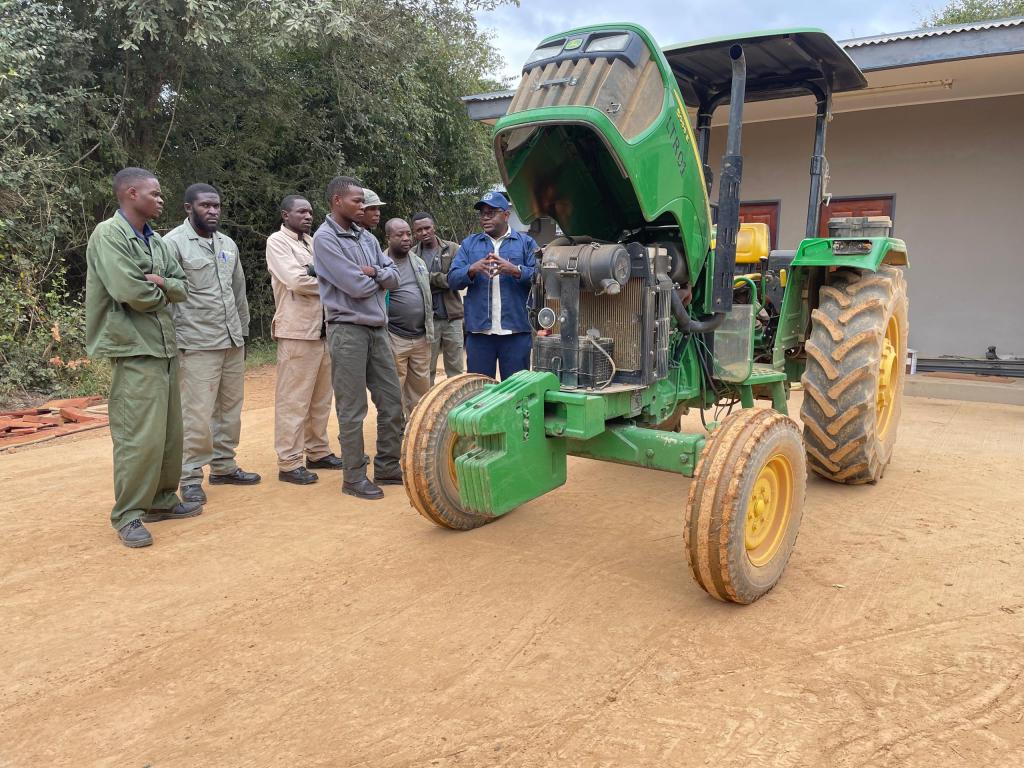
Fig1 Tractor maintenance practical demonstrations led by AKTC’ machinery expert, Mr Martin Sikanyika
The demand for AKTC training services outside of AKTC has been steadily increasing, therefore shining a bright light to the positive impact the training may have on those having access to them. This demand not only increases AKTC’s knowledge spread and visibility but also enhances AKTC’s understanding of the prevailing trends and practices in various places therefore providing opportunities for acquiring new knowledge and experiences
This demand also points to the trust and confidence that organizations have exhibited in our services, and nothing confirms this assertion than being re-called to provide further services by an organization. This is a case of AKTC’s tractor operator’s training conducted at Mushingashi Conservancy for the first time in 2023 and secondly in the year 2025.
On 12th to 16th May 2025, The AKTC team led by Mr. Martin Sikanyika, AKTC’s machinery expert and accompanied by Mr. Genius Chabinga, AKTC’s training Coordinator and Mr. Loyd Sakala, AKTC’s tractor operator, conducted a comprehensive Tractor Safety, Maintenance and Operations training with an additional focus on reverse tractor driving with a self-articulated trailer. The training was organized following a request from Mushingashi conservancy management to have their tractor operators trained by AKTC
The trained group comprised of 6 males from various departments of Mushingashi conservancy, 3 of the 6 were operators and the other 3 were new to tractor operations. During the introduction session of the training, the group highlighted various expectations from the training which included daily maintenance checkups, knowing tractor parts & function, how and when to engage 4 wheel and diff lock, as well as speeds election during operations to mention a few.

Fig 2 Photo of training expectations from the operators
The training was done in two parts. Day 1and 2 handled the theory part of Tractor Safety, Maintenance and Operations. Notable discussion points centered around human safety, machinery safety as well as the environment. On safety it was highly advised that every operator should be safety conscious at each point in the operation, by being aware of the possible hazards that may occur, what would cause it and taking the necessary steps to prevent those occurrences.
On the maintenance, it was largely emphasized that it plays a major role in achieving safety for the operator, the machine and the environment. Mr. Sikanyika also stressed that maintenance is not the same as repairing, therefore it should be every operator’s duty to ensure that the machinery under his/her custody is maintained and not to rely entirely on the workshop personnel. He further highlighted some of the advantages of maintenance, which included key to extending tractor life span, leading to fewer breakdowns, therefore increases productivity, lower operating costs (by saving time and money) and boosts resale value.

Fig 3. Photo of Mr. Sikanyika giving a theory presentation to tractor maintenance
The tractor systems that included Cooling, Oil – Engine, Transmission, Hydraulic, Steering, Brake Fluid, Electrics, Air, Fuel, Belts were discussed in the theory presentations. On the morning of the third day, the practical demonstration of tractor maintenance and each system were discussed in detail. On the cooling systems, radiator maintenance and function of coolant were discussed, on the oil system; the trainer highlighted oil types (engine, hydraulic, diff & power steering) and functions. The electrics focused on battery maintenance and the use of battery water. The air system on the other hand focused on the looked at function and maintenance of filters while on the fuel system, the trainer emphasized the importance of refueling from a proper source, servicing the fuel filters and constantly checking the fuel/water separator to ensure that only clean fuel is entering the engine.

Fig 4 Photo of Mr. Sikanyika during the practical demonstration of tractor maintenance
The remaining time was dedicated to practical tractor driving with a focus on reverse driving with a self-articulated Trailer (a trailer with a turning table). Ample time was allocated to each operator so that they can get full familiarization and develop adequate tractor and trailer sense. With AKTC’s operator, Mr. Loyd Sakala demonstrating on the reversing practice, it was impressive to note that by the time we were coming to end of day 2 of tractor driving; each of the operator had enough basic skill in reversing. Despite facing some challenges to get it right Mr. Sikanyika emphasized that driving skill is only perfected through practice and that for the team to get to expert level, they will need to continue practicing even after the training.

Fig 5. Photo of an operator during the reversing exercise
Conclusion.
The training ended on the morning of the fifth day with an evaluation of the expectations established at the start of the training. It was great to note that the training sessions both theory/practicals met the trainees -expectations. The AKTC team thanked the Mushingashi operators for their dedication to learning and encouraged them to put the new acquired knowledge & experience to beneficial use.

Fig 6. Photo of AKTC Team and Mushingashi conservancy operators after successfully concluding the training.